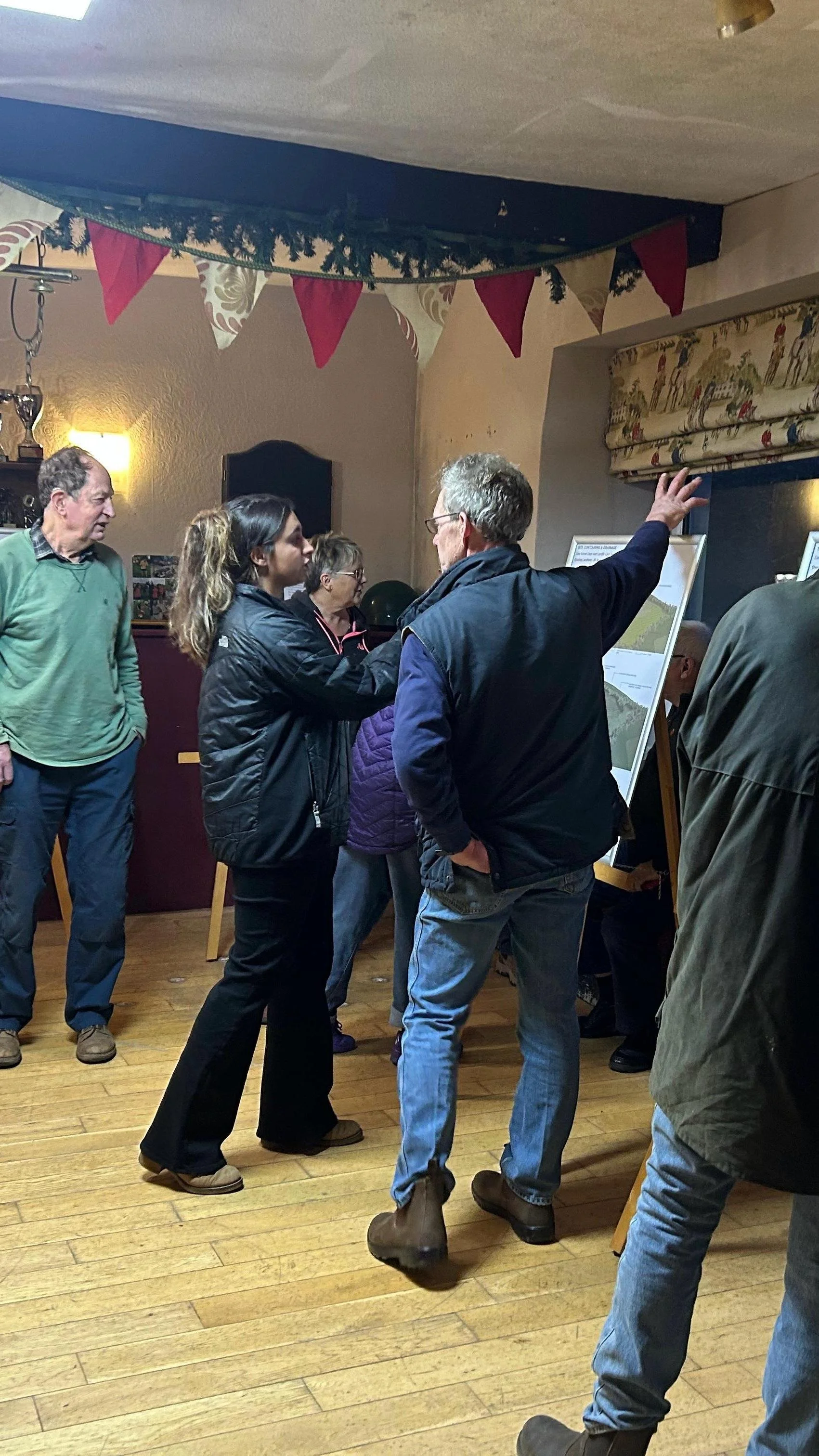
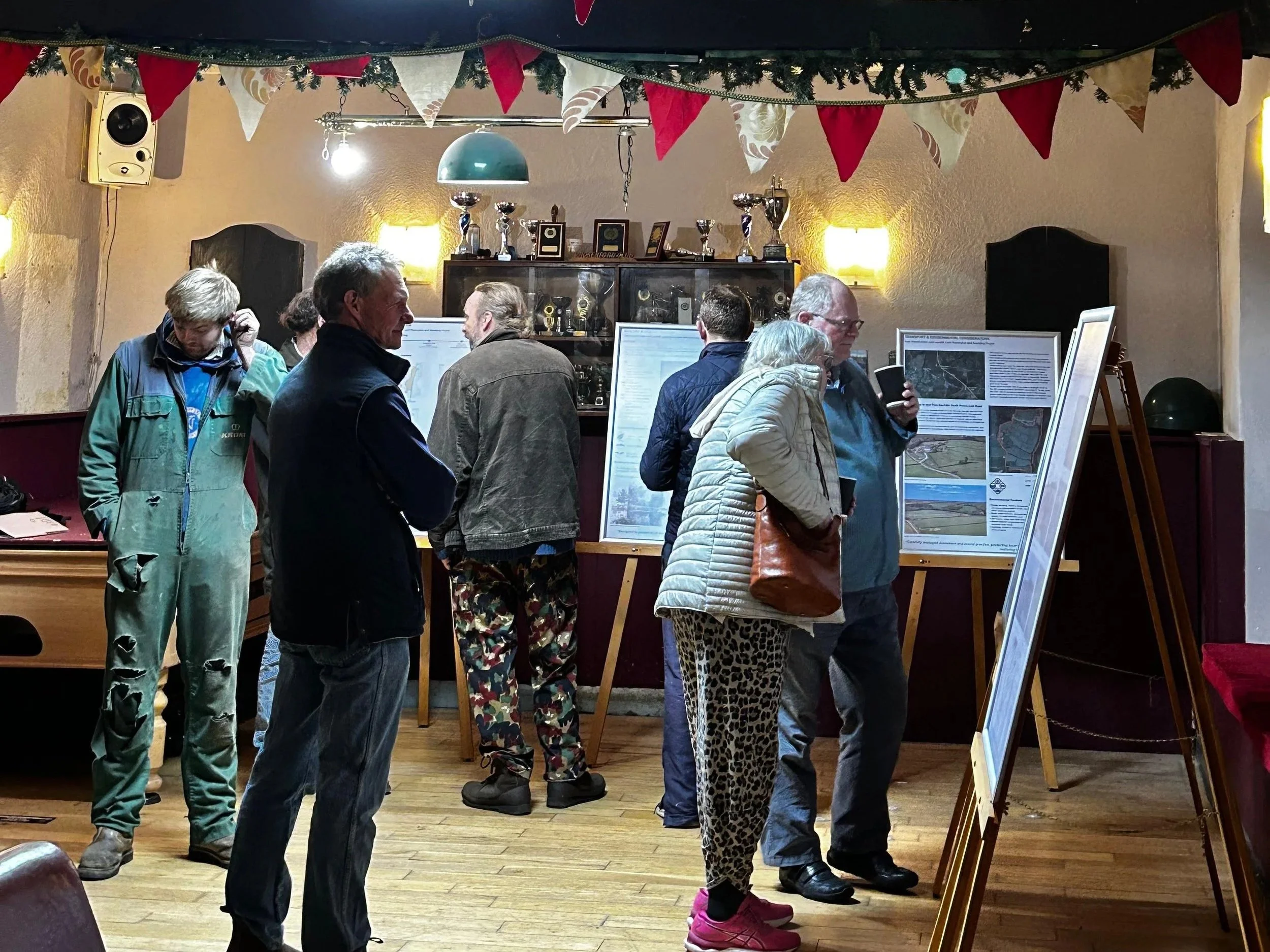
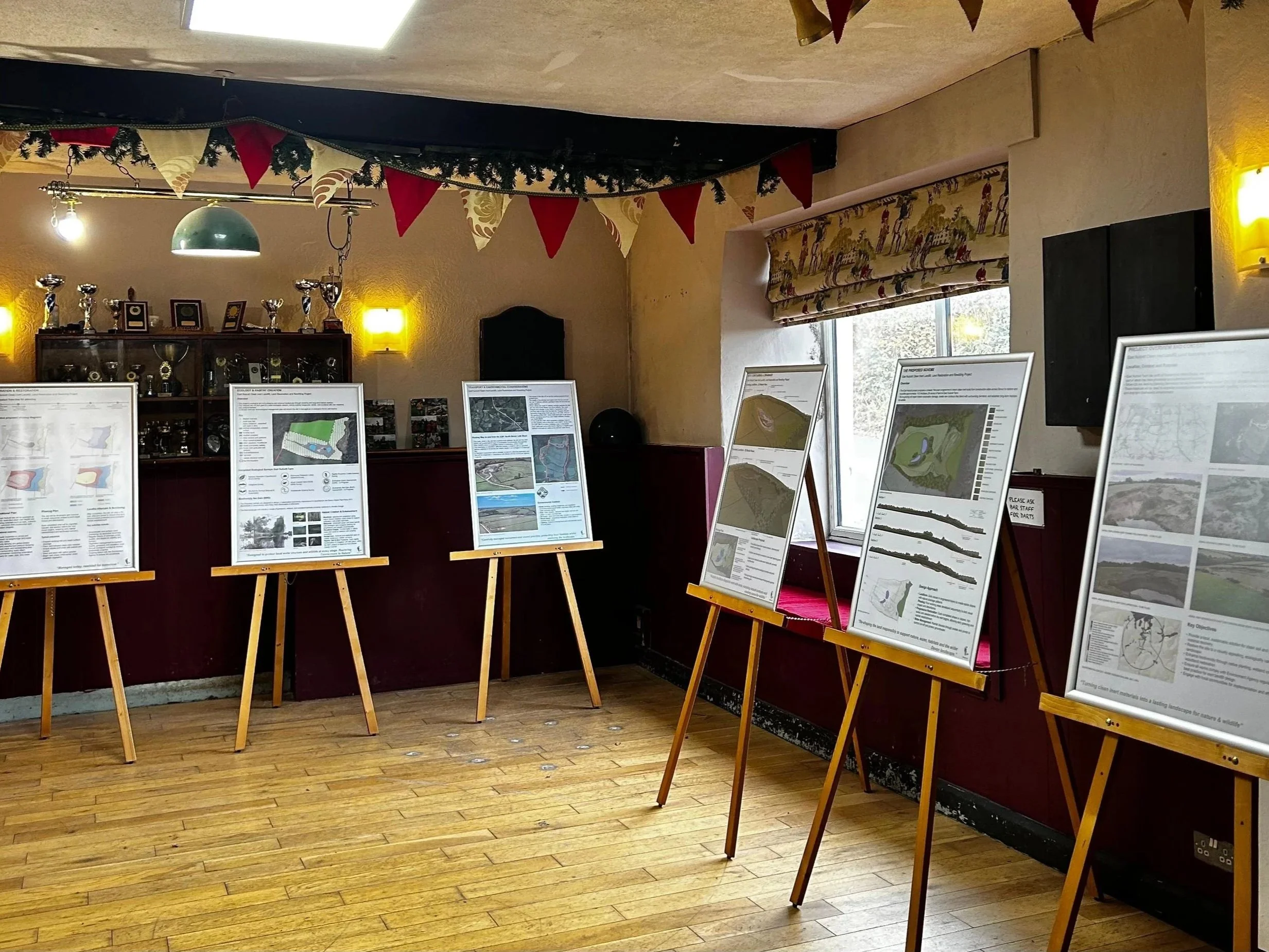
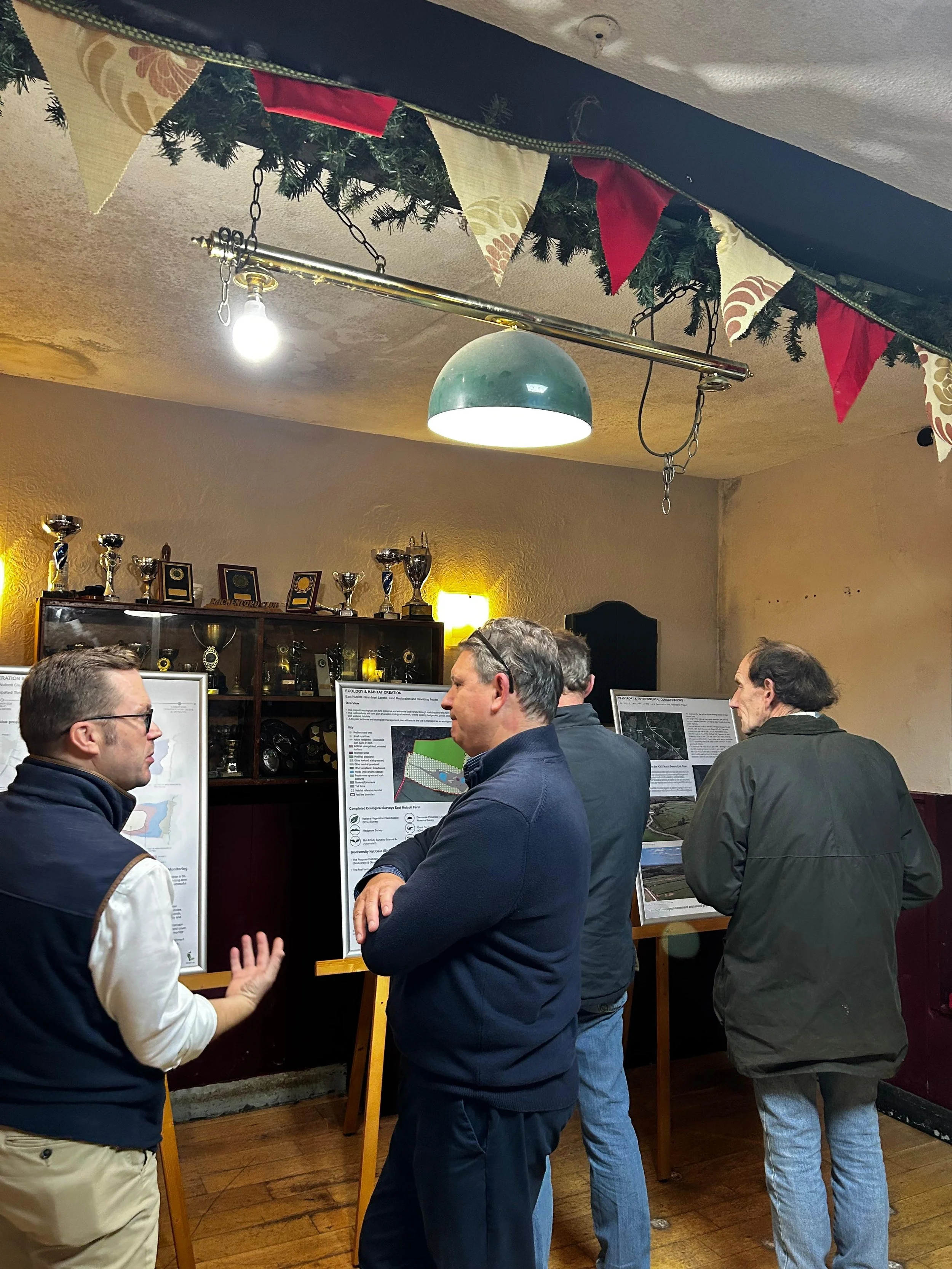
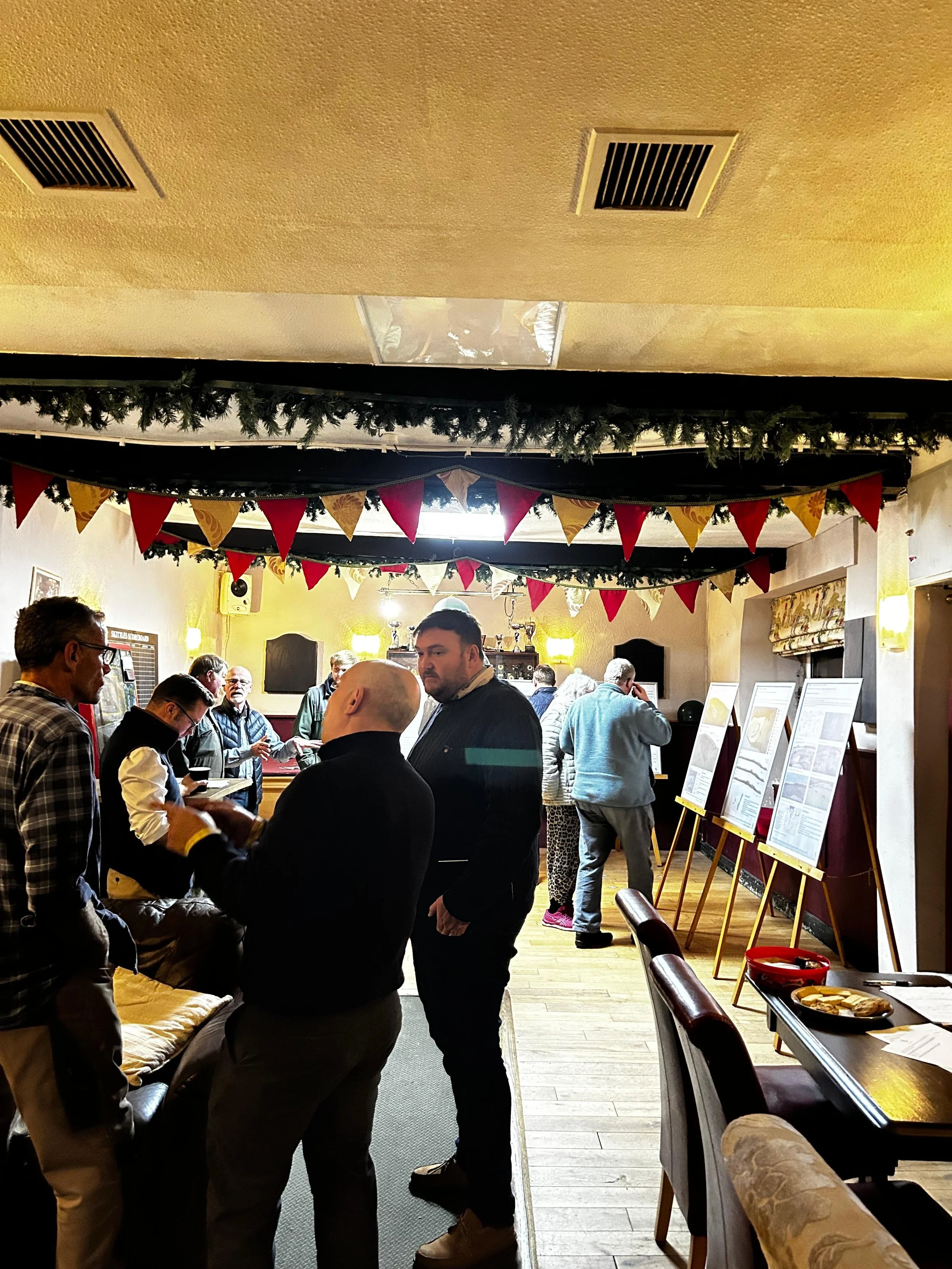
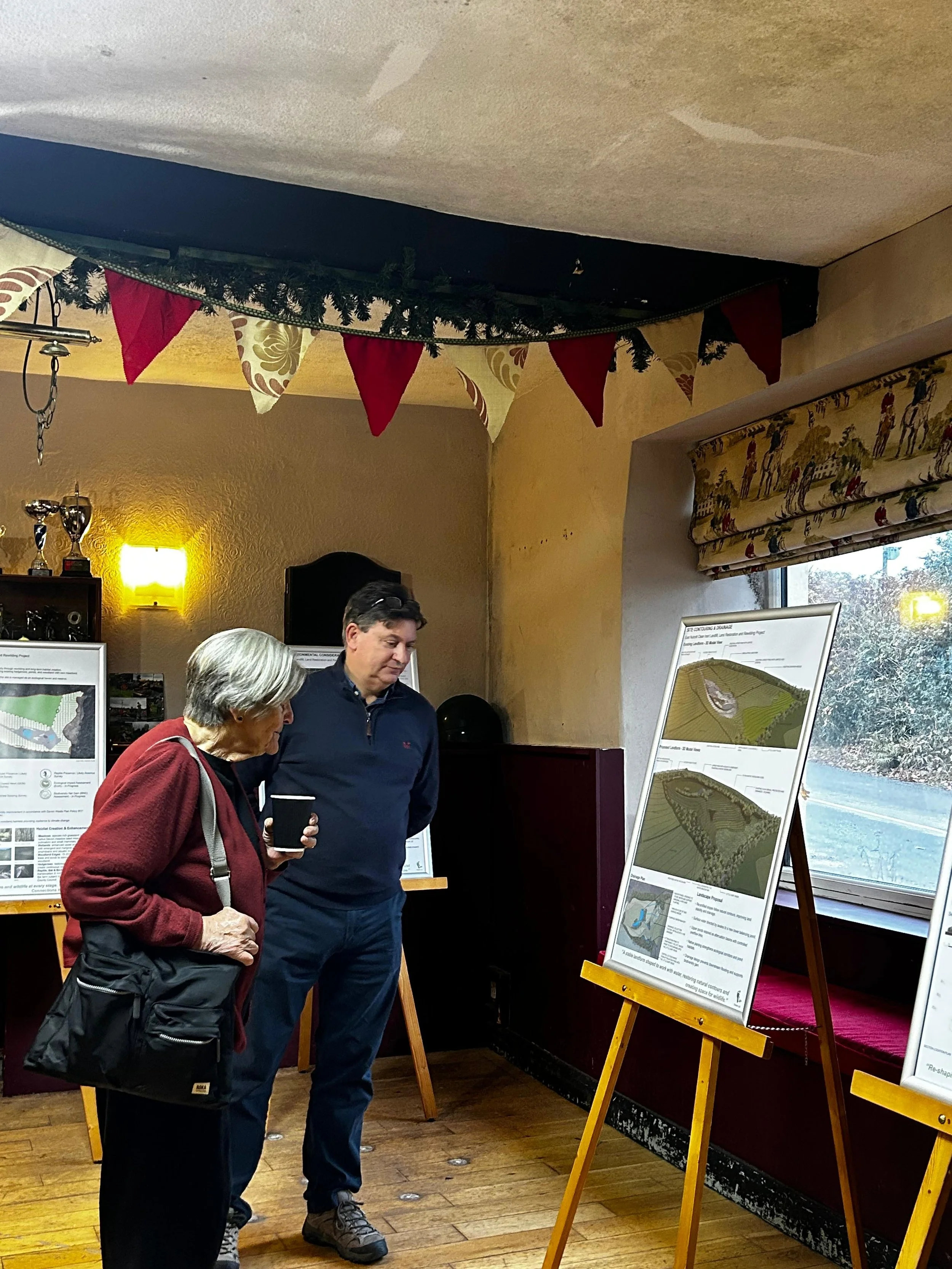
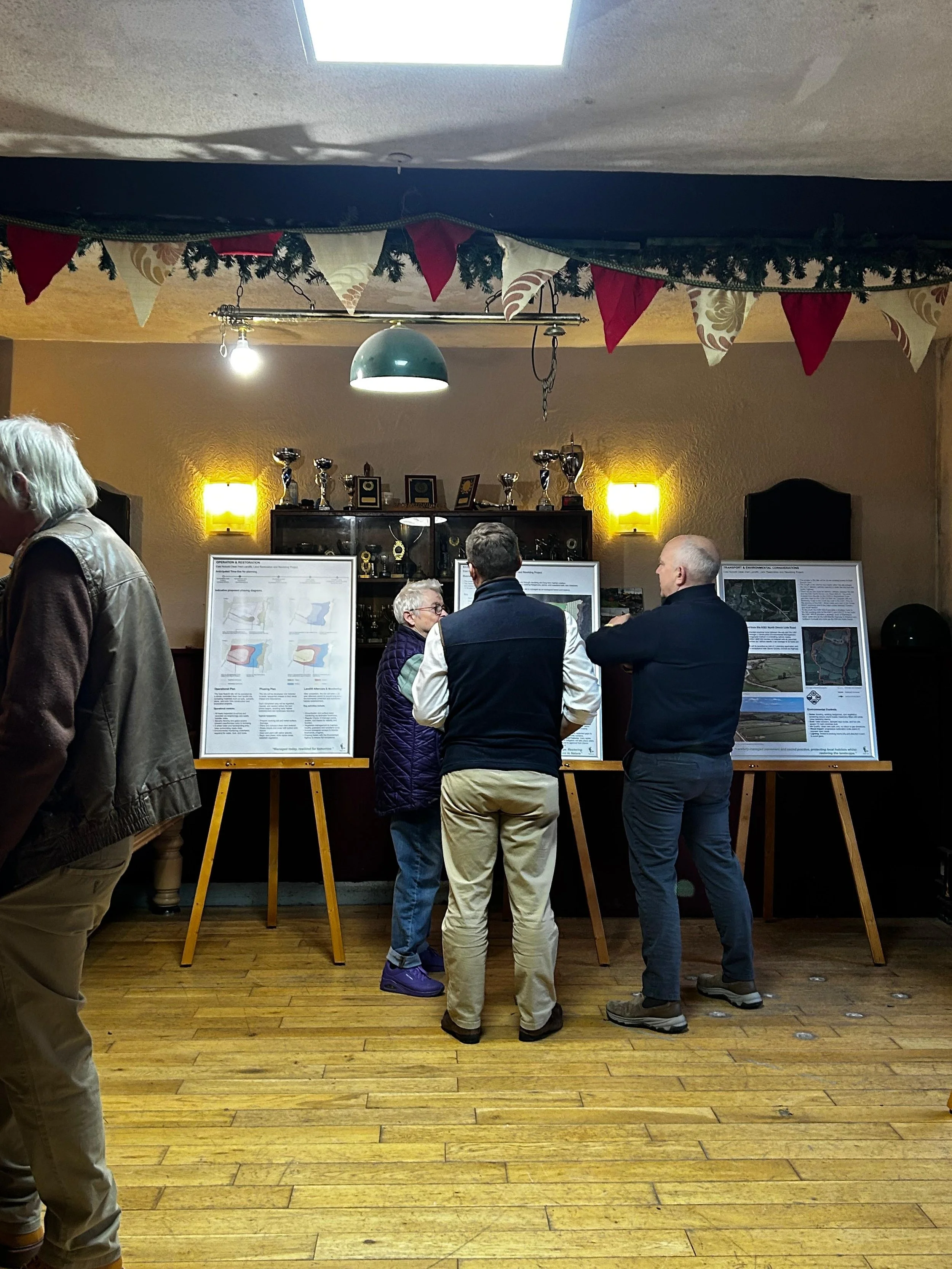
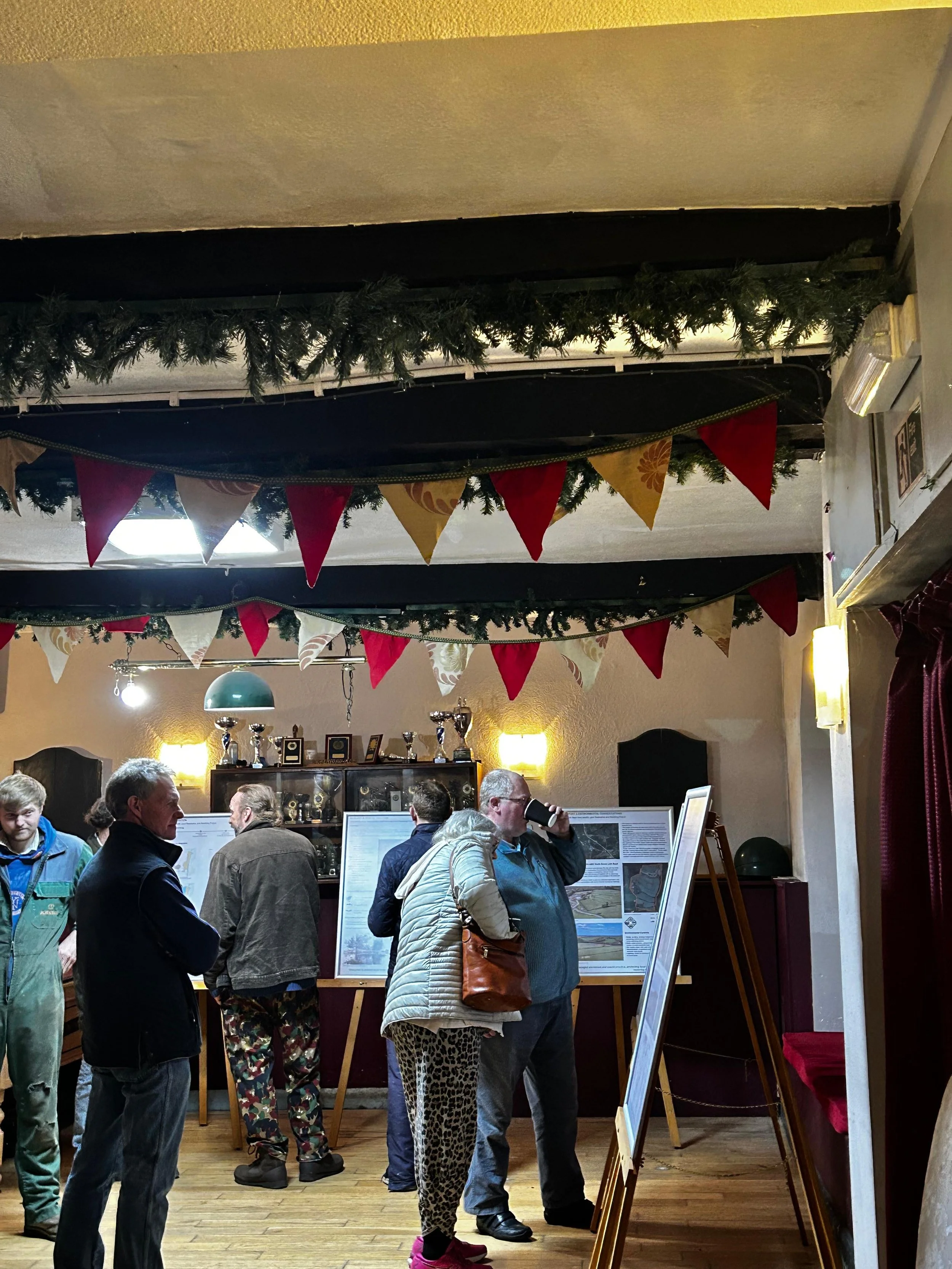
The Public Consultation was held in Rackenford Club on the 13th November 2025 and a presentation to the Parish Council was held in Rackenford Primary School on the 2nd of December 2025. - Here are the most frequently asked questions.
-
Clean inert landfill involves placing natural, non-polluting materials such as soil, clay and stone to reshape and improve the land. These materials remain chemically stable and do not produce gas, odour or contamination. They are widely used for safe land restoration and landscape improvement projects.
-
The land will be gently regraded using clean inert material to create a more stable and natural landform. The site will be seeded and planted with species-rich grassland, new hedgerows, woodland and wetland features. A long-term management plan will guide the establishment of these habitats and support biodiversity.
-
Water quality will be monitored in accordance with the requirements set by the Environment Agency and the local planning authority. This may include periodic sampling of surface water, groundwater and nearby watercourses to ensure that the clean inert material is performing as expected and that no adverse impacts occur.
-
Devon has a recognised need for additional capacity for clean inert material to support land restoration, construction and infrastructure projects. This scheme provides a controlled and environmentally responsible location for managing inert material, while delivering landscape and ecological benefits alongside the required disposal capacity.
-
Transport assessments will be carried out as part of the planning application to identify safe and suitable vehicle routes. The number of vehicle movements, routing options and mitigation measures will be clearly set out in the planning submission. This may include designated access routes, timing restrictions and measures to minimise local disruption.
-
The site provides a suitable location for the controlled placement of clean inert material and has the capacity to support meaningful landscape and ecological restoration. It also allows for habitat creation that connects into the wider ecological network and reflects the character of the surrounding countryside.
-
Under the Operator's Duty of care, a record of the details of each load must be held at the Site Office, for inspection whenever requested by the Environment Agency, including vehicle registration, operator, source and material description. All loads will need to be pre-notified to the Site and these will only be accepted from bona-fide hauliers.
A designated Quarantine area will be maintained on site for the temporary storage of any materials which are not acceptable or need to be tested to confirm their suitability. In addition to routine visual inspection of loads, samples will be collected by a third party from randomly selected vehicles for testing for a comprehensive suite of chemical parameters, including asbestos, by an independent 3rd party laboratory. All unpermitted or unsuitable materials will be rejected and removed from site.
-
The scheme is proposed to run as a phased five-year programme, followed by a 30-year ecological aftercare period.
-
New habitats will include:
Species-rich Devon meadows
Wetland pools with emergent and marginal planting
Woodland edge and scrub
Strengthened hedgerow corridors
Culm grassland enhancement
-
A long-term management plan will maintain grassland, woodland, hedgerow and wetland habitats.
Monitoring will include groundwater checks, drainage inspections and annual ecological surveys. -
Working hours will follow standard planning and environmental requirements. No night-time operations or lighting are proposed, and all activity will take place during approved daytime hours to minimise disturbance.
-
Internal haul roads are long enough to prevent queuing and will be damped down in dry conditions. Low site speeds (15 mph) and water suppression will keep dust to a minimum.
-
Existing upper and lower ponds with limited vegetation will be reshaped or filled, then enhanced with emergent, marginal and aquatic planting. New water pools and a balancing pond will also be created to support drainage and wildlife.
-
Regraded slopes follow natural contours, channelling water into swales and a balancing pond. Water is temporarily stored and then discharged at a controlled rate into the Little Dart River, reducing downstream flood risk.
-
Surveys include hedgerow surveys, NVC vegetation surveys, bat activity surveys, reptile and dormouse surveys, invertebrate scoping, GCN eDNA testing, and an Ecological Impact Assessment in progress. Full details are listed on the Ecology & Habitat Creation board.
-
The project will create species-rich Devon meadows, wetlands, woodland edges, reinforced hedgerows and Culm grassland enhancement. These habitats are designed to deliver measurable Biodiversity Net Gain (BNG) in line with Devon Waste Plan policies W11 and W20.
-
Mitigation measures include phased works, habitat buffers, woodland protection zones, reptile translocation (subject to approval) and careful landform design to retain key habitat features. These are shown on the Operation and Restoration Boards.
-
The site lies near designated Culm grassland and County Wildlife Site areas. These zones are being protected and strengthened through buffer planting, controlled drainage and habitat enhancement.
-
The existing Culm Grass will be unaffected by the proposals and enhanced. It is hoped that this part of the County Wildlife Site would form part of the Landscape and Ecological Landscape Plan.